
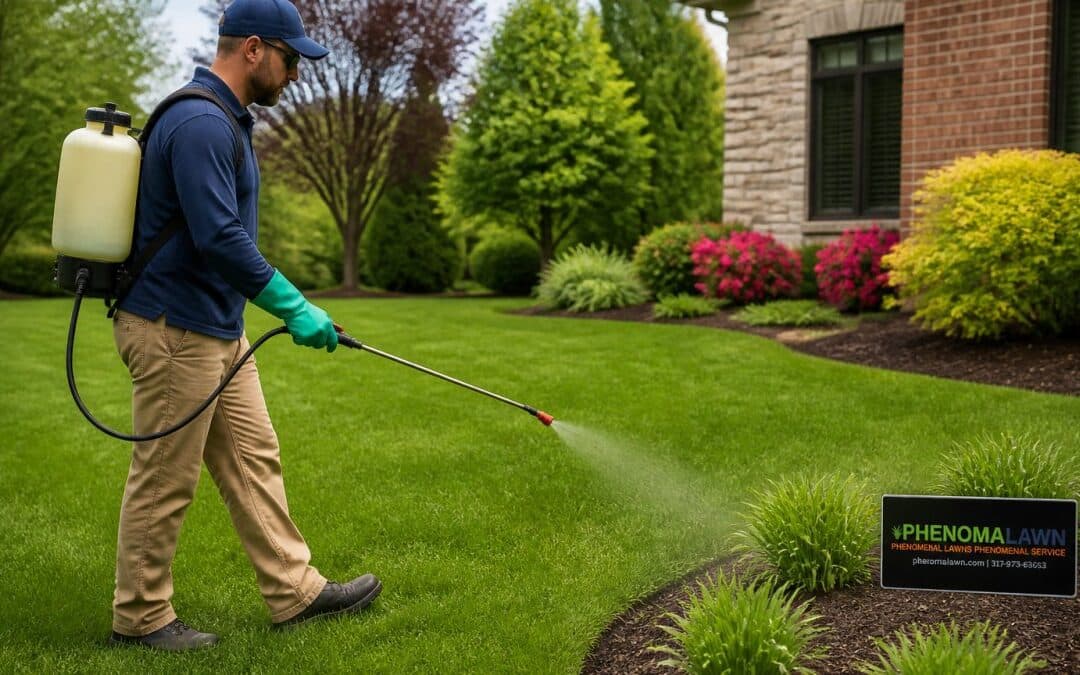
Quick Summary
To control lawn pests naturally, first identify the pest from its damage pattern and the time of year, then build a healthy lawn with high mowing, deep watering, and regular feeding. Use cultural and biological controls before spot treatments, and recheck pest counts two weeks after any treatment to see whether it worked.
- Mow grass at 3 to 4 inches to shade soil and develop deeper roots.
- Water about an inch per week in one or two deep soakings rather than shallow daily watering.
- Treat grubs when you find five or more per square foot in a damaged area.
- Apply beneficial nematodes to moist soil in late summer to target young grubs.
- Recheck pest counts two weeks after treatment by pulling back sod in damaged spots.
Table of Contents
- Identifying Lawn Pests by Damage Pattern and Season
- Building Lawn Health to Prevent Pest Problems
- Integrated Pest Management for Lawns: Choosing the Right Approach
- Natural Grub Control for Lawns, Step by Step
- Making a Homemade Lawn Bug Spray and Knowing What It Can and Cannot Do
- Monitoring Results and Deciding When to Call a Professional
- Scheduling Your Next Step With Phenomalawn
- Frequently Asked Questions
Identifying Lawn Pests by Damage Pattern and Season
Most lawn pest damage looks like drought, disease, or poor mowing at first glance. The fastest way to tell the difference is to match the damage to the time of year and the pattern it leaves behind.
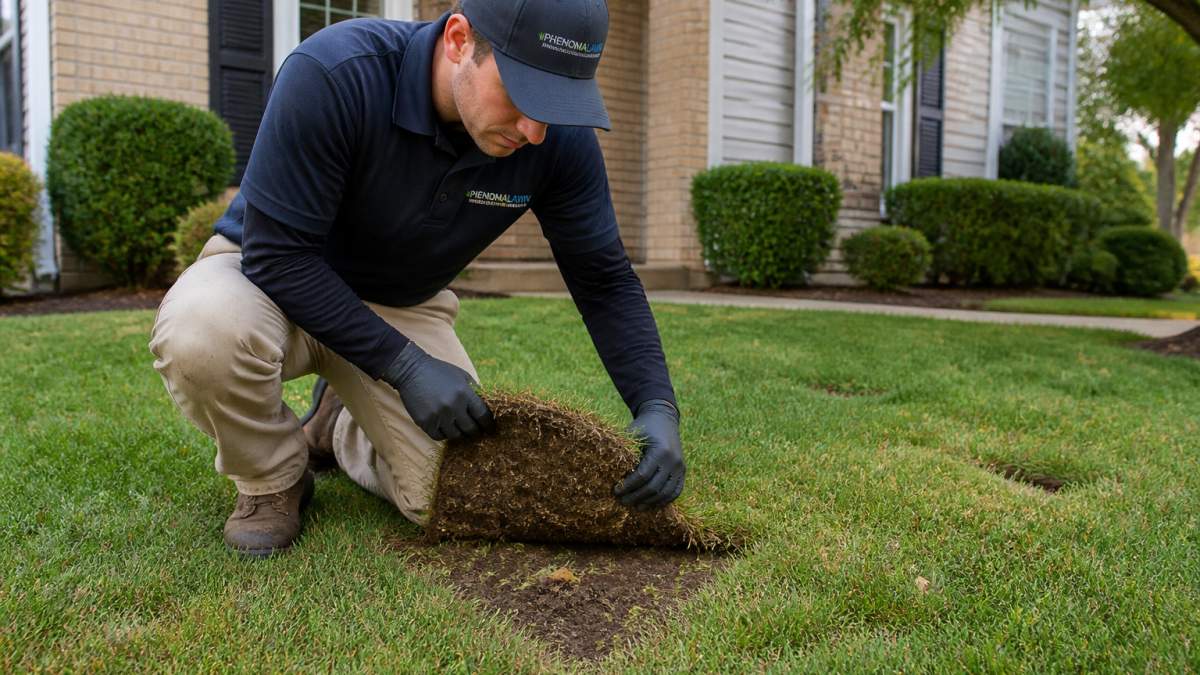
They are the larvae of beetles that lay eggs in the soil during summer, and they feed on grass roots. Turf with grub damage pulls up like a loose carpet because the roots are gone.
Signs of Grub Damage in Spring and Late Summer
Grub damage shows up at two points in the year, and each one looks a little different.
- Late summer: Brown, dead patches appear, often in irregular shapes, and the grass lifts easily when you tug on it.
- Early spring: Patches that never greened up after winter, sometimes with birds or skunks digging holes to feed on the larvae.
- Soft, spongy turf: Walking on the lawn feels unstable because the root system is no longer holding the soil.
Chinch Bugs, Sod Webworms, and Other Common Pests
Grubs are not the only pest that damages Indiana lawns. Chinch bugs and sod webworms cause very different damage.
- Chinch bugs suck sap from grass blades, usually in hot, dry weather. Look for yellow patches that spread outward from sunny areas, especially along driveways and sidewalks.
- Sod webworms feed at night and leave small, irregular brown spots. You may see moths flying up from the grass when you walk through it at dusk.
- Armyworms can strip a lawn in a few days. Their damage looks like mowing gone wrong, with ragged blades and bare soil.
Building Lawn Health to Prevent Pest Problems
Start with the basics that matter most:
- Mow high: Keep blades around 3 to 4 inches. Taller grass shades the soil and develops deeper roots.
- Water deeply, not often: Give the lawn about an inch of water once or twice a week. Shallow daily watering trains roots to stay near the surface, where pests do the most damage.
- Feed on schedule: Balanced fertilization builds thick turf that crowds out weeds and recovers quickly from stress.
- Clear debris: Remove leaf piles and thatch buildup, which give pests shelter.
Phenomalawn uses an all-liquid program.
Integrated Pest Management for Lawns: Choosing the Right Approach
Integrated pest management, or IPM, is a decision sequence, not a product. The version that works on a home lawn has four moving parts: a monitoring calendar, action thresholds, a treatment ladder matched to the pest, and a follow-up check that tells you whether to stop or escalate.
A Simple Monitoring Calendar
| When | What to check | Why it matters |
|---|---|---|
| Early spring | Patches that never greened up; tug test for loose sod | |
| Late spring | Sunny slopes and driveway edges for chinch bug yellowing | |
| Early summer | Dusk walks for moths rising from turf | |
| Late summer | Square-foot grub counts as young larvae hatch | |
| Fall | Thatch depth and soil compaction |
Action Thresholds: When to Treat and When to Wait
- Grubs: treat when you find five or more per square foot in a damaged area.
- Chinch bugs: treat when yellowing spreads beyond a small patch or a soap flush surfaces more than a dozen nymphs per square yard.
- Sod webworms: treat when you find more than a few larvae per square foot or when bare soil appears under ragged blades.
- Scattered surface insects: usually leave them. Ants and ground beetles are predators that help keep other pests in check.
The Treatment Ladder, Pest by Pest
- Cultural controls first. Mow at 3 to 4 inches, water about an inch per week in one or two deep soakings, and dethatch when the layer exceeds half an inch. These steps alone resolve many borderline infestations.
- Biological controls next. Beneficial nematodes for grubs, applied to moist soil in late summer. Bt or neem oil for young caterpillars. Conserve lady beetles and ground beetles rather than spraying them.
- Targeted spot treatment. Treat only the damaged zone, not the whole lawn, and recheck in two weeks.
- Escalate only when thresholds stay exceeded. If counts do not fall after a full natural cycle, a broader program makes sense.
Measuring Whether It Worked
Recheck two weeks after any treatment. Pull back sod in the same spots and count again. Success looks like falling pest numbers and new green shoots at the edges of damaged patches, not instant color. If damage is still spreading after two full cycles, or if you cannot identify the pest, that is the point to bring in a professional rather than keep spraying.
Natural Grub Control for Lawns, Step by Step
Natural grub control works best when you act at the right time. Beneficial nematodes are most effective when applied in late summer, when young grubs are near the surface and the soil is moist.
Step 1: Confirm the grubs.
Step 2: Check soil moisture.
Step 3: Apply in the evening.
Step 4: Keep the soil moist.
Step 5: Watch the results.
Grub protection is also available in the spring from Phenomalawn, backed by a season-long guarantee.
Making a Homemade Lawn Bug Spray and Knowing What It Can and Cannot Do
Homemade sprays are the first thing many homeowners try, and they can work, but only when the recipe matches the pest, the life stage, and the weather. Most disappointing results come from spraying the wrong thing at the wrong time rather than from a bad recipe.
Matching the Spray to the Pest
| Pest | What actually works | What does not |
|---|---|---|
| Aphids and other soft-bodied insects on blades | Insecticidal soap (potassium salts of fatty acids) mixed to label strength | Dish soap at strong concentrations, which can burn turf |
| Sod webworms and young caterpillars | Neem oil or Bacillus thuringiensis (Bt) applied in the evening | Garlic or pepper sprays, which are not reliably effective |
| Chinch bugs in sunny, dry areas | Soap flush to confirm, then targeted spot treatment | Full-lawn sprays that also kill predators |
| Grubs underground | Beneficial nematodes applied to moist soil in late summer | Any contact spray, which never reaches the larvae |
What the Evidence Actually Supports
Insecticidal soap and neem oil are the two home remedies with the most consistent support for soft-bodied insects and young caterpillars. Bt is well established for caterpillar larvae that eat treated foliage. Garlic, pepper, and essential-oil sprays have far less consistent results on turf pests, and university extension guidance generally treats them as low-priority options. None of these products moves through soil, so none of them reaches grubs.
Application Rules That Protect Pollinators, Pets, and Kids
- Spray after sunset when bees and other pollinators are not foraging. Neem oil is especially harmful to bees if it lands on blooming clover or dandelions.
- Keep pets and children off treated turf until the spray has dried completely, usually one to two hours in dry weather.
- Do not spray within 24 hours of rain, and never near storm drains, creeks, or ponds; runoff from soap and oil sprays can harm aquatic life.
- Reapply contact sprays every seven to ten days while the pest is active, because they break down quickly in sunlight.
Setting Realistic Expectations
Contact sprays knock down what they hit and nothing else. If you find five or more grubs per square foot, or chinch bugs spreading across a large sunny slope, a homemade spray will not turn the lawn around. Use these products as spot treatments inside a broader plan, and measure results by pulling back sod and counting pests again in two weeks rather than by eyeballing color.
Monitoring Results and Deciding When to Call a Professional
Call a professional when:
- Damage covers large areas of the lawn
- Grubs remain after a full natural treatment cycle
- You cannot identify the pest
- The lawn keeps declining despite your efforts
Homeowners in Fishers, Noblesville, Westfield, and Carmel often reach this point after trying several do-it-yourself approaches. Residents of Noblesville can review the lawn care services available in Noblesville, IN. Find local lawn care in Fishers, IN built around Indiana lawn conditions. Phenomalawn offers local lawn care for Indiana lawns, and you can get a lawn care quote. For fertilization and weed control designed for Indiana grass, see the 7-step lawn care program.
Scheduling Your Next Step With Phenomalawn
Controlling lawn pests naturally comes down to three habits: identify the pest by its damage pattern, build a lawn that resists it, and act at the right time in the season. Start with a close look at your turf this week and note where the damage sits.
Lawn care in Carmel, IN is available for homeowners in that area, and our program includes grub protection with a season-long guarantee. Reach out to get your lawn back on track.
Frequently Asked Questions
How do you get rid of bugs in your grass?
Start by identifying which pest is present, since grubs, chinch bugs, and sod webworms are different pests. Phenomalawn offers spring grub protection with a season-long guarantee.
How can I tell which pest is damaging my lawn?
Look at the pattern and timing of the damage. Grubs, chinch bugs, and sod webworms can cause different damage patterns.
How do I know when natural lawn pest control is working?
Signs of success include fewer new brown patches, grass that springs back when lightly tugged, and fewer insects when you check the soil. Expect a few weeks before you see clear improvement, because natural treatments act more slowly than synthetic products. If the damage keeps spreading after two treatment cycles, the pest may need a different approach or a professional assessment.
