
Last Updated: November 24, 2026
Quick Summary
Professional grub control is a scheduled, season-long program handled by a lawn care provider, while DIY application means buying a grub product and applying it yourself. Timing, application evenness, and accountability are the main differences, and professional service is backed by a guarantee.
- Apply grub control in late spring to early summer, before grub eggs hatch and larvae begin feeding on grass roots.
- Preventive products do not kill adult beetles or eggs, so they must be in the soil and watered in before larvae start chewing.
- Common DIY mistakes include applying after grubs are large, skipping the watering step, and spreading unevenly.
- Curative treatment targets an active infestation but is less forgiving than prevention, and dead patches still need time and overseeding to recover.
- Grub damage looks like irregular brown patches that pull up easily, like loose carpet, because the roots are gone.
Table of Contents
- Professional Grub Control vs DIY Application: Which Works?
- Quick Comparison: Effort, Timing, and Results
- When to Apply Grub Control for the Best Results
- DIY Grub Control Application: Products, Limits, and Common Mistakes
- Curative Grub Treatment: What to Do When Grubs Are Already There
- Is Grub Control Necessary Every Year?
- How to Spot Grub Damage Before It Spreads
- Request a Grub Protection Quote for Your Lawn
- Frequently Asked Questions
Professional Grub Control vs DIY Application: Which Works?
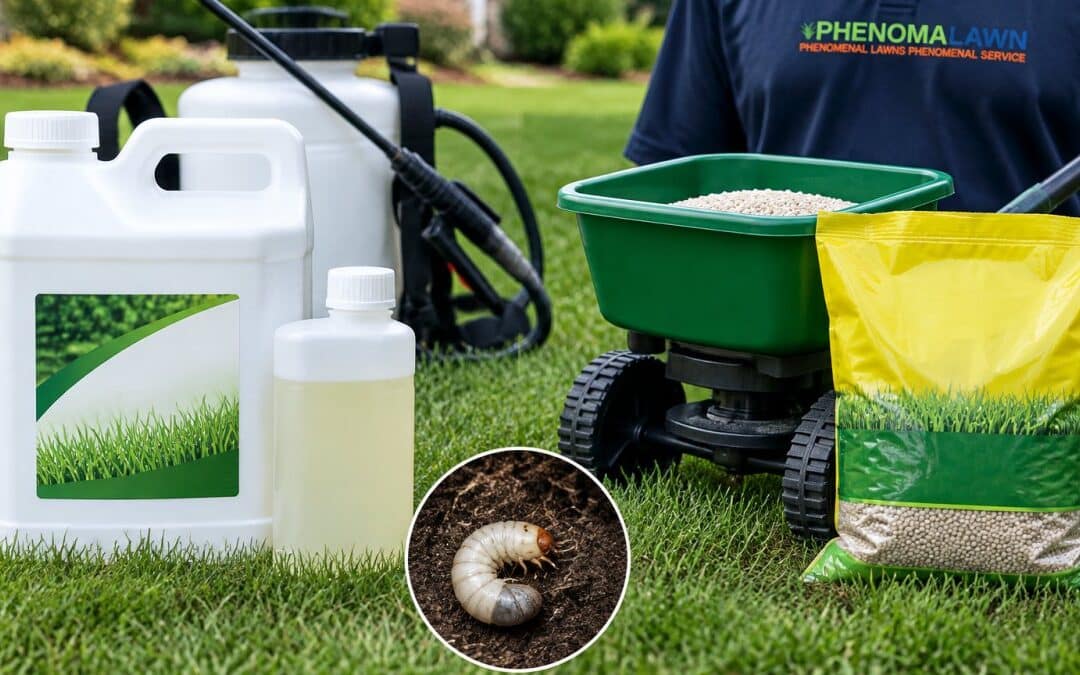
Professional grub control is a scheduled, season-long application program handled by a lawn care provider, while DIY application means buying a grub product and applying it yourself. This guide breaks down where each approach holds up.
The difference comes down to three things: when the product goes down, how precisely it is applied, and who is accountable if grubs still show up. White grubs feed on grass roots just below the surface, and by the time damage is visible, the window for the easiest fix has usually closed.
Below, we walk through timing, product limits, curative options, and how to tell grub damage from disease so you can decide which route fits your lawn.
Quick Comparison: Effort, Timing, and Results
Here is the short version. DIY grub control depends entirely on you hitting the right window and applying evenly. Professional service trades that labor for a scheduled program with a guarantee behind it.
| Factor | DIY Application | Professional Grub Control |
|---|---|---|
| Effort | You buy, mix, and apply | Handled by technicians |
| Timing accuracy | Easy to miss the window | Scheduled in spring |
| Application evenness | Varies by equipment | Consistent coverage |
| Results if timing is off | Often disappointing | Backed by a guarantee |
| Accountability | On you | Service guarantee |
The real question is whether you trust yourself to apply at the right time, at the right rate, with the right watering. For a fuller picture of what a complete local program includes, see our lawn care services in Carmel, Indiana guide.
When to Apply Grub Control for the Best Results
Apply grub control in late spring to early summer, timed so the product is in the soil when grub eggs hatch and the small larvae begin feeding on grass roots. Timing is the single biggest factor in whether the treatment works, because preventive products do not kill adult beetles or eggs, they need to be present and watered in before the larvae start chewing.
The window is not the same everywhere. Grub life cycles track soil temperature and moisture, so the hatch timing varies by region. Rather than a fixed date, watch for the conditions that drive the hatch: soil warming consistently and consistent spring rainfall.
Application accuracy matters as much as the date. An uneven spread leaves strips of lawn unprotected, and those strips are where damage shows up first. Watering after treatment moves the product down to the root zone where grubs live; without that watering step, the product can sit on the surface and lose effectiveness. Get the timing and the watering right, and prevention does most of the work.
Watch out: applying in midsummer or fall, after grubs are already large and feeding heavily, is a common reason homeowners see little change. The window was missed.
If you would rather not track the hatch yourself, a scheduled spring application removes the guesswork. At Phenomalawn, we apply grub protection in the spring with a season-long guarantee, so the timing is handled for you.
DIY Grub Control Application: Products, Limits, and Common Mistakes
DIY grub control works when you pick the right product, apply it at the correct rate, and water it in properly. The limits are real, though. Store-bought grub products vary in strength and formulation, and the label directions are not optional.
The label is the instruction manual, and it is specific for a reason. It tells you the rate per area, whether the product needs to be watered in and how soon, and what precautions to take around pets, children, and pollinators. Follow the rate exactly, more is not better, and over-application can harm the lawn and the beneficial insects in your yard. If you plan to combine treatments, it helps to know whether you can apply grub control and fertilizer together, which we cover in our guide to combining grub control and fertilizer.
Watering is where many DIY applications fail. Preventive products need to reach the root zone. Check the label for the required watering timing and amount, and apply when rain is not about to wash the product away.
The most common mistakes we see:
- Applying after the grubs are already large and feeding heavily
- Skipping the watering step, so the product never reaches the soil
- Spreading unevenly, leaving bare patches unprotected
- Using a product past its effectiveness window for the season
- Ignoring label precautions around pets, children, and pollinators
Safety deserves its own line. Grub products can affect non-target insects, and pets and children can be exposed on a treated lawn. Read the label for re-entry and watering-in guidance, keep pets and children off the lawn until the product is watered in and dry, and avoid applying during bloom when pollinators are active. These steps protect your yard and the insects that help it.
Watch out: treating a brown patch for grubs when the real problem is disease can delay the right fix. Confirm grubs are present before you apply.
Curative Grub Treatment: What to Do When Grubs Are Already There
Curative grub treatment targets an active infestation rather than preventing one. If you can peel back a patch of dead turf and see white grubs curled in the soil, you have an active problem, and the approach changes. Curative products work on grubs that are already present, but they are less forgiving than prevention.
The honest truth: curative treatment is harder to get right than prevention. Grubs that are large and feeding heavily are tougher to control, and by the time you notice damage, the roots are already chewed. A curative application can stop the spread, but the dead patches still need to recover, which takes time and often some overseeding.
Is Grub Control Necessary Every Year?
Grub control is not strictly necessary every year for every lawn, but annual prevention is the safer bet in areas with a history of grub damage. Grub populations rise and fall, and a lawn that had a problem last season is more likely to have one again. Skipping a year can let numbers build back up quietly.
A common approach is to treat preventively each spring and watch for signs through the season.
At Phenomalawn, we apply grub protection in the spring with a season-long guarantee.
How to Spot Grub Damage Before It Spreads
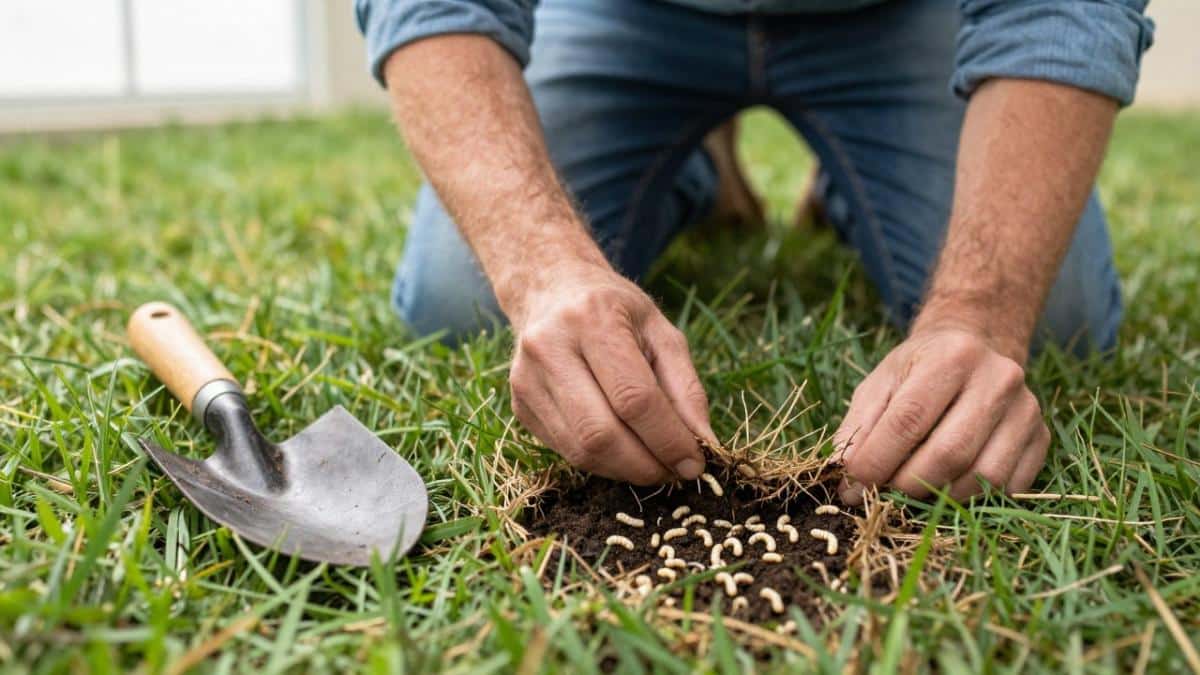
Grub damage looks like irregular brown patches that pull up easily, like loose carpet, because the roots are gone. If you can lift the turf and it peels away with little resistance, grubs are a likely cause. Dig a small square of turf at the edge of a brown patch and check the soil just below for white, C-shaped grubs.
Watch out: brown patches have several possible causes, and treating for grubs when the real problem is disease wastes money and delays the right fix. Our guide to common lawn diseases in Central Indiana helps you rule out disease before you treat.
Check a few spots, not just one. A single patch could be drought stress or a disease, but grubs tend to show up in clusters. Early detection is what keeps a small problem from becoming a full-lawn repair.
Request a Grub Protection Quote for Your Lawn
The simplest next step is to let a local team handle the timing and application for you. Phenomalawn applies grub protection in the spring with a season-long guarantee. We use an all-liquid program with no hidden fees or surprise upsells.
We serve homeowners across Hamilton County, and you can see exactly what our lawn care in Carmel, IN covers. When you are ready, get your free lawn care quote and we will send most quotes the same day.
Stop guessing whether your grub treatment landed in the right window. Phenomalawn builds a spring grub protection program with a season-long guarantee, an all-liquid application that includes everything for the price given, and trained technicians who treat your lawn like their own. Get started with Phenomalawn and protect your turf before the damage shows.
Frequently Asked Questions
Is it better to apply grub control yourself or hire a professional?
It depends on your lawn size, how bad the infestation is, and how much time you have. DIY grub control application works for small yards with light pressure, but the products sold at retail often have shorter residual activity and require precise watering to work. For lawns with a history of grub damage, a professional program can be a practical choice.
When should you apply grub control to a lawn?
Preventive grub control is typically applied in late spring to early summer, before grubs hatch and start feeding on grass roots. Curative grub treatment is applied later, once grubs are active and damage is visible. Timing matters more than the product itself, because grubs are easiest to control when they are small and near the soil surface. Watering the product in after application helps it reach the root zone.
Is September too late for grub control?
September is not too late, but it changes the type of treatment you need. By September, grubs are larger and have already caused root damage, so a preventive product will not be as effective. A curative grub treatment is the better option at that point. Keep in mind that grubs may already have done visible damage, so lawn recovery takes longer.
Is grub control necessary every year?
Not always, but annual prevention is the safest approach for lawns with a history of grub damage. Grub populations cycle, and a heavy year often follows a light one. If your lawn has never shown grub damage and nearby lawns are clean, you may be able to skip a year and monitor instead.
Can DIY grub control prevent lawn damage?
Yes, if you apply the right product at the right time and water it in properly. The main limits of DIY grub control are application accuracy and product residual. Retail grub killer products break down faster and require even coverage, which is hard to achieve with a spreader on uneven ground.
