
Last Updated: November 22, 2026
Quick Summary
The best time for lawn aeration and overseeding in Indiana is early fall, when the soil is still warm and cool-season grass is growing new roots. Aerate first, then overseed right after while the holes are open, so seed gets good soil contact.
- Aerate before overseeding, because running the aerator over fresh seed buries it too deep.
- Mow slightly shorter than usual one or two days before aerating.
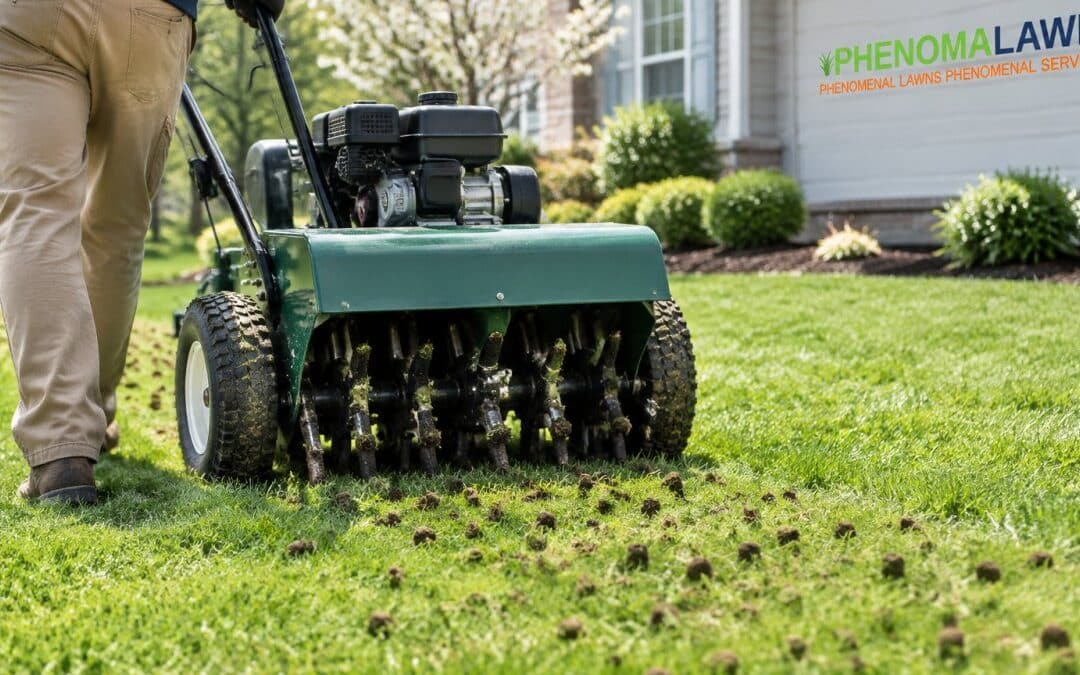
- Leave the soil plugs on the surface to break down after core aeration.
- Once-a-year core aeration is standard for most lawns on Indiana clay.
- Skip aeration when grass is dense, water drains well, and the ground gives underfoot.
Table of Contents
- Why Timing Decides Whether Aeration Works
- How to Aerate Lawn and Overseed in the Right Order
- The Seasonal Calendar for Aeration and Overseeding
- How Often to Aerate Lawn Clay Soil in Indiana
- Aerate Lawn Tools: What Homeowners Actually Need
- Aerating Lawn Before and After: What to Expect
- When to Skip Aeration and What to Do Instead
- Request a Quote for Aeration and Overseeding
- Frequently Asked Questions
Why Timing Decides Whether Aeration Works
The best time for lawn aeration and overseeding in Indiana is early fall, when cool-season grass is waking up and the soil is still warm.
Homeowners often do the right work at the wrong time and wonder why nothing changed.
Lawn aeration is the process of pulling small cores of soil out of the turf to relieve compaction. Those holes let air, water, and nutrients reach the root zone.
Timing matters because grass has two jobs in fall: recover from summer and grow new roots. Aeration stresses the lawn for a short stretch. Seed needs warm soil and steady moisture to sprout.
Do both in the same window and the grass heals while the seed starts. Split them across seasons and each job gets harder.
How to Aerate Lawn and Overseed in the Right Order
Aerate first, then overseed. That order is not a preference, it is how the two jobs fit together.
Core aeration pulls soil plugs and leaves small openings across the lawn. Seed dropped into those openings sits in loose soil with good seed-to-soil contact. That contact is what decides whether seed sprouts or dries out on top.
Here is the order we follow:
- Mow slightly shorter than usual, one or two days ahead
- Water the lawn a day before so the soil is soft but not muddy
- Run the core aerator across the whole lawn in two directions
- Leave the soil plugs on the surface to break down
- Spread seed right after aerating, while the holes are open
- Apply a starter fertilizer suited to Indiana soil
- Water lightly and often until the new grass is up
Should You Aerate Before or After Overseeding?
Aerate before overseeding. Running the aerator over fresh seed buries some of it too deep and drags the rest around. Seed needs to sit near the surface, not under it.
The one exception is a lawn that only needs a light touch-up. In that case, a second pass with a spike aerator after seeding can press seed into the soil. For most Hamilton County lawns, aerate first and seed straight after.
The Seasonal Calendar for Aeration and Overseeding
Early fall is the main window. Late summer is the backup. Spring is a distant third for overseeding.
| Season | Aeration | Overseeding | Why |
|---|---|---|---|
| Early fall | Best | Best | Warm soil, cool air, strong root growth |
| Late summer | Good | Fair | Soil still warm, heat stress possible |
| Spring | Fair | Poor | Weed pressure, weak root growth |
| Summer | Skip | Skip | Heat stress, poor germination |
For local timing and service details, see our lawn care in Noblesville, IN.
Fall works because the soil stays warm while the air cools. Grass roots keep growing until the ground chills. Seed gets the same warm soil it needs to sprout, without the baking heat of July.
Spring aeration has its place on badly compacted lawns. Spring overseeding usually loses to summer weeds and crabgrass, which sprout in the same conditions as new grass.
How Often to Aerate Lawn Clay Soil in Indiana
Once a year is the standard for most lawns on Indiana clay. Heavy clay soil compacts faster than sandy loam, so annual core aeration keeps the root zone from sealing over. But the right frequency depends on how fast your soil re-compacts, and that is something you can check yourself without a soil test.
A Simple Diagnosis Before You Commit
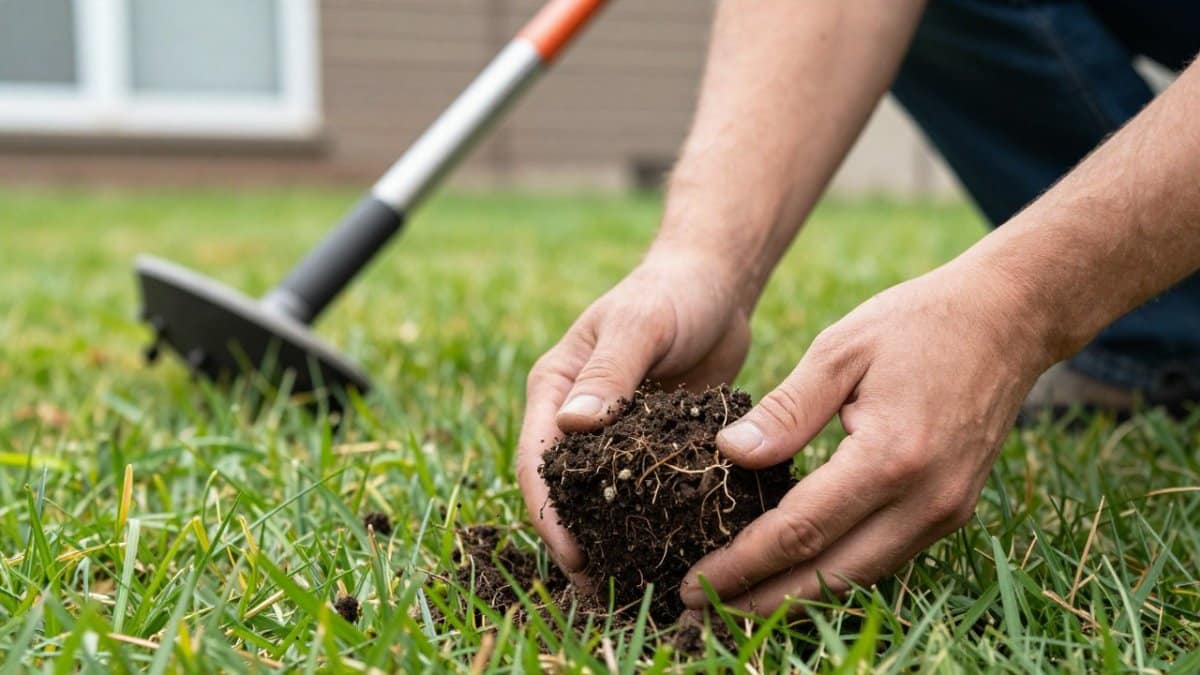
Before scheduling aeration, confirm that compaction is actually the problem. Push a screwdriver or soil probe into the turf. If it slides in easily with modest pressure, your soil is probably not compacted enough to justify the service. If it resists, especially when the soil is moist, compaction is likely limiting roots.
Watch out: a screwdriver that stops in dry soil may just mean drought, not compaction. Water the area first and try again the next day.
Other signs that point to compaction rather than pests or disease:
- Water puddles and drains slowly after rain
- The ground feels hard underfoot even when moist
- Weeds like plantain and knotweed thrive while grass thins
- Roots stay shallow when you pull a turf plug
If those signs are absent and the lawn is thin for other reasons, aeration may add little. In that case, feeding and weed control are the better first step.
Frequency by Lawn Situation
| Situation | Suggested Frequency | Why |
|---|---|---|
| Average home lawn on clay | Every year | Clay re-compacts under normal traffic |
| Heavy foot traffic or dog run | Every year, possibly twice | Concentrated pressure seals surface faster |
| New build with graded subsoil | First 2-3 years annually | Topsoil was disturbed and compacted during construction |
| Sandy loam with light traffic | Every 2-3 years | Compacts more slowly |
| Lawn that drains well and feels soft | As needed, not on a schedule | Aeration may be unnecessary |
The Cost-Benefit Question
Aeration has a cost, whether you rent a core aerator for a weekend or hire a service. The practical question is whether the expected improvement justifies that cost. On a heavily compacted clay lawn with thin turf, aeration plus overseeding can help thicken the turf over time.
A simple rule: if the screwdriver test resists and water ponds, aeration is likely worth it. If the soil is soft and water soaks in, put the budget toward feeding instead. For lawns that need both, an all-liquid program where everything is included for the price given can cover feeding and weed control while you decide on aeration.
If you would rather not rent equipment and haul plugs around, professional aeration and overseeding in Noblesville, IN is available.
Aerate Lawn Tools: What Homeowners Actually Need
A hollow-tine aerator is the tool that works. Spike aerators and liquid products are easier to find, but they do a different job.
Core aeration pulls actual plugs of soil out of the ground. That is what relieves compaction. Spike aeration pushes soil aside with solid tines, which can tighten clay further. Liquid aeration is a soil conditioner, not a substitute for pulling cores.
What you actually need:
- A core or hollow-tine aerator, walk-behind or tow-behind
- A spreader for seed and starter fertilizer
- A hose or sprinkler you can run on a schedule
- A rake for breaking up plugs if they bother you
Renting a core aerator for a weekend works on smaller lawns. On a large lot, the machine fights clay and the job takes longer than expected.
Aerating Lawn Before and After: What to Expect
The lawn looks worse before it looks better. Plugs on the surface, a scuffed pattern, and a few days of stress are normal. New grass takes weeks, not days.
Plan on this timeline:
- Day 1: plugs on the surface, lawn looks rough
- Week 1: plugs break down, holes start to close
- Weeks 2 to 3: seed sprouts if watered well
- Weeks 4 to 6: new grass fills in, thin spots thicken
- Next season: real improvement in density and color
What Results Actually Depend On
The timeline above assumes three things: the soil was genuinely compacted, the seed stayed moist, and the lawn was not already too damaged to recover. If any of those are missing, results will be slower or may not appear at all.
Aeration relieves compaction, but it does not fix thin grass caused by shade, disease, grubs, or poor fertility. If the lawn is thin because of grub damage, aeration alone will not bring it back. Spring grub protection with a season-long guarantee addresses that problem separately.
Realistic Expectations by Lawn Condition
| Starting Condition | Likely Outcome After Aeration + Overseeding |
|---|---|
| Moderately compacted clay, some thin spots | Noticeable thickening in 4-8 weeks, fuller lawn next season |
| Heavily compacted, bare patches | Slow improvement; may need a second season of overseeding |
| Thin due to grubs or disease | Little improvement from aeration alone; treat the underlying cause first |
| Already dense, well-draining lawn | Minimal visible change; aeration may not be worth the cost |
Watch out: skipping water for a week after overseeding wastes the seed and the money you spent on it. New seed dries out fast in fall wind, and light, frequent watering beats one deep soak.
If you are planning grub protection alongside this work, our guide on whether you can apply grub control and fertilizer together covers how those treatments fit the schedule.
When to Skip Aeration and What to Do Instead
Not every lawn needs it. If your soil is loose, your grass is thick, and water soaks in after rain, aeration adds little.
Skip aeration when:
- The lawn is new and the soil was recently worked
- Grass is dense with no bare patches
- Water drains well and the ground gives underfoot
- Weeds, not compaction, are the real problem
For thin grass caused by weeds or poor feeding, a fertilization and weed control program does more than pulling cores. We use an all-liquid program where everything is included for the price given. If the lawn needs it, it gets it.
We do not run soil tests or site visits for an assessment. We apply grub protection in the spring with a season-long guarantee. For most lawns, the fix is feeding and weed control, not aeration.
Request a Quote for Aeration and Overseeding
The next step is simple: get a quote and get on the fall schedule before the window closes.
Aeration and overseeding work best inside a narrow stretch of weeks. Once the soil cools, seed sits until spring and weeds get the head start.
Phenomalawn serves Hamilton County. Our 7-step program uses professional-grade fertilizers designed for Indiana lawns. We aim to quote honestly, with no hidden fees or surprise upsells.
Get started with Phenomalawn and give your lawn the fall window it needs. Request a quote.
Fall is short in Indiana, and the window for aeration and overseeding closes fast. Phenomalawn serves Hamilton County homeowners with a 7-step lawn program, professional-grade fertilizers for Indiana soil, and a service guarantee that backs the work.
Frequently Asked Questions
Is lawn core aeration worth it?
Core aeration is worth it when your soil is compacted. It pulls small soil plugs out of the ground, which opens the root zone so water, air, and nutrients can reach grass roots. On a lawn with heavy foot traffic, clay soil, or thin grass, the improvement in water infiltration and root depth is noticeable. On a lawn that is already loose and healthy, the benefit is smaller. The best time for lawn aeration is when the grass is actively growing and can recover quickly.
What month is best to aerate and overseed a lawn in Indiana?
In Indiana, late August through early October is the best window for lawn aeration and overseeding. Cool-season grasses like tall fescue and Kentucky bluegrass are recovering from summer stress and putting energy into root growth. Soil is still warm, air is cooler, and fall rain helps new seed germinate. Spring aeration works for warm-season grasses or badly compacted lawns, but fall gives new seed the most time to establish before winter.
How often should you aerate clay soil?
Clay soil compacts faster than sandy or loamy soil, so most lawns on clay benefit from core aeration once a year. If your lawn sees heavy foot traffic or has bare patches and thin grass, you may need it every year without skipping. Lawns on better soil with light traffic can go two years between treatments. The key is to diagnose compaction first, not to aerate on a fixed schedule just because it is fall.
Should I aerate before or after overseeding?
Aerate first, then overseed. Core aeration pulls soil plugs and opens channels into the root zone. When you spread seed afterward, it falls into those holes and makes direct contact with soil, which raises germination rates. If you overseed first, the aerator can drag seed around and bury it unevenly. Water lightly after seeding and keep the top inch of soil moist until the new grass is established.
