
Last Updated: October 24, 2026
Quick Summary
Common lawn diseases in central in Indiana thrive in the humid summers and variable spring weather that define this region, striking during specific seasons under particular moisture conditions. Fungal diseases like brown patch, dollar spot, and leaf spot are often the culprit when grass turns brown, develops patches, or thins unexpectedly. Early identification and targeted treatment are essential to stop the spread before infection establishes itself deep in the turf.
- Spring brings leaf spot, red thread, dollar spot, and large patch in cool, wet conditions.
- Early summer activates brown patch when nights stay above 60°F with high humidity.
- Inspect patch shape, individual blade lesions, recent weather, and soil moisture to diagnose disease before treating.
- Poor drainage, thatch buildup, short mowing, and weak turf create ideal conditions for fungal infection.
- Aeration and overseeding relieve compaction and introduce disease-resistant grass varieties.
Table of Contents
- Understanding Common Lawn Diseases in Central Indiana
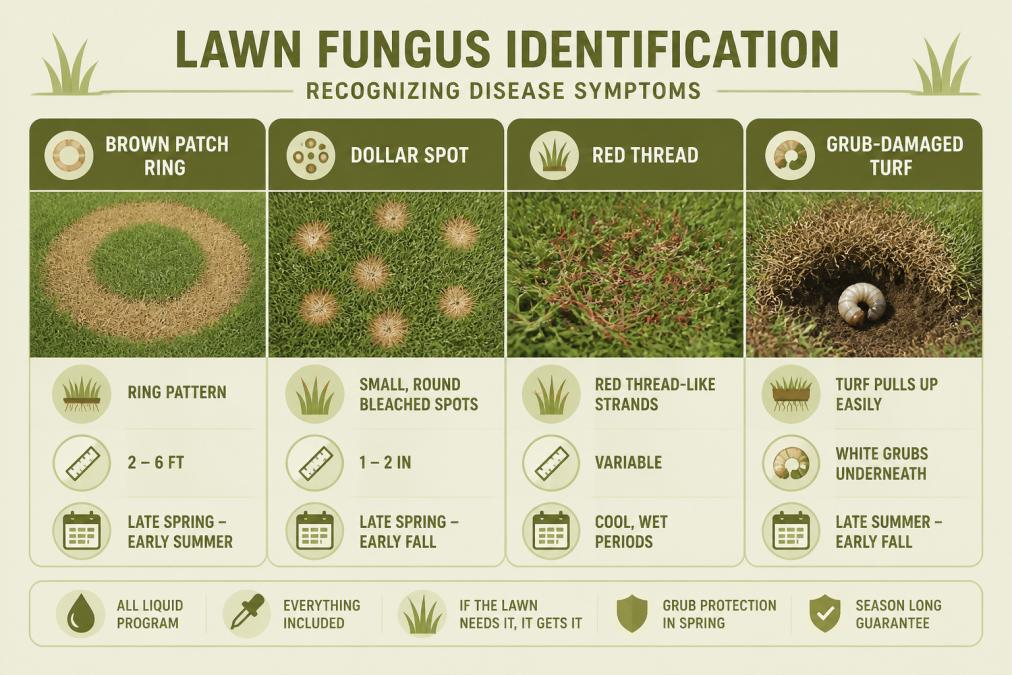
- Lawn Fungus Identification: Recognizing Disease Symptoms
- Brown Patch Lawn Disease and Other Seasonal Threats
- Brown Grass Causes: Conditions That Encourage Fungal Disease
- Lawn Disease Prevention: Integrated Management Strategies
- Frequently Asked Questions
Understanding Common Lawn Diseases in Central Indiana
Common lawn diseases in central in Indiana thrive in the humid summers and variable spring weather that define this region.
The challenge isn’t just identifying what’s wrong, it’s acting fast enough to stop the spread.
We’ve worked with hundreds of yards across the region, and the pattern is consistent: the lawns that recover quickest are those where disease was caught early and treated with a targeted approach.
Lawn Fungus Identification: Recognizing Disease Symptoms
Most disease guides stop at “brown patches mean fungus,” but drought, grub damage, compaction, and winter injury all produce brown patches too. The method below narrows a problem using four inputs: patch shape, lesion appearance, recent weather, and time of year. Work through them in order rather than jumping to a fungicide.
Step 1: Read the Patch Shape and Edge
Patch geometry is the fastest filter.
- Perfect circles that expand outward point to brown patch, dollar spot, or large patch. A darker outer ring with a lighter or recovering center (the doughnut pattern) is classic brown patch.
- Irregular, ragged dead zones more often indicate grub feeding, chinch bug damage, or drought, not a foliar fungus.
- Small, distinct spots roughly the diameter of a silver dollar suggest dollar spot, especially when dozens appear at once.
Measure a few patches and note whether they are growing. A patch that holds the same size for two weeks is more likely abiotic stress than active infection.
Step 2: Inspect Individual Blades, Not Just the Canopy
Pull a few blades from the edge of a patch, where the disease is most active, and examine them in good light.
- Dark brown or black lesions with a yellow halo on individual blades point to leaf spot diseases.
- Bleached, tan lesions running across the blade with a reddish-brown border suggest dollar spot.
- Water-soaked, dark, wilting blades in humid weather suggest brown patch or Pythium blight, the latter being the more urgent of the two.
Check the crown, the growing point where blades meet the soil. If the crown is firm and white, the plant may recover once the leaf disease is managed. If the crown is brown and mushy, the plant is dead and recovery depends on overseeding, not fungicide.
Step 3: Use Weather and Timing as a Filter
Fungal activity tracks temperature and moisture closely. Ask what the last ten days looked like.
- Warm nights above roughly 60°F with high humidity favor brown patch.
- Moderate days with heavy dew and long leaf wetness favor dollar spot and red thread.
- Cool, wet conditions in spring and fall favor leaf spot and large patch.
If patches worsened after a wet stretch, a foliar fungus is likely. If they worsened during a dry stretch, suspect drought, compaction, or insect feeding instead.
Step 4: Rule Out the Lookalikes
This is where most homeowners misdiagnose.
- Drought stress thins the whole lawn evenly and the soil beneath is dry. Fungal patches have sharp boundaries and moist soil underneath.
- Grub damage pulls up like a loose carpet because roots are severed. Fungal patches stay rooted.
- Compaction produces thin, hard turf in traffic areas, often without defined patches.
Do not apply fungicide to a patch you have not diagnosed. Fungicides labeled for brown patch will not fix grub damage or drought, and repeated unnecessary applications add cost without solving the problem.
Step 5: Confirm Before You Treat
If the four inputs point to a foliar disease, a professional can confirm the pathogen and select the correct product. If they point to a lookalike, the fix is cultural: adjust irrigation, relieve compaction, or address insects. Getting this step right separates a lawn that recovers in three weeks from one that gets renovated in the fall.
Brown Patch Lawn Disease and Other Seasonal Threats
Disease pressure from common lawn diseases in central in Indiana follows a predictable calendar. Knowing which disease is likely in which window turns a vague “my lawn looks bad” into a short list of suspects. The timeline below is built around temperature thresholds and moisture patterns rather than fixed dates, since timing shifts year to year.
Spring: Green-Up Through Early June
Spring is the highest-risk window for cool-season diseases because grass grows fast, soils stay wet, and nights are still cool.
- Leaf spot diseases appear first, usually within weeks of green-up. Look for dark lesions with yellow halos on tender new blades. Damage is mostly cosmetic unless the disease progresses into the crown.
- Red thread shows up in cool, wet, low-nitrogen turf. The pink threads are the most visible sign, but the underlying issue is often thin, hungry grass.
- Dollar spot begins as dew periods lengthen and daytime temperatures climb into the 60s and 70s.
Spring is also when grub protection is applied, with a season-long guarantee. Controlling grubs early protects the root system that the grass needs to outgrow spring leaf disease.
Early Summer: The Brown Patch Window
Brown patch is the headline disease of the season and the one most homeowners recognize. It activates when nighttime temperatures stay above roughly 60°F and humidity is high, typically late June into July and August.
- Patches start small and expand in rings, often with a darker outer edge and a lighter center.
- Damage is worst on overwatered, overfertilized, closely mowed, or poorly drained turf.
- Spores move on mower decks, shoes, and water splash, so an infected lawn can seed a healthy one.
Pythium blight is the emergency case in the same window. It appears during hot, humid, saturated conditions and can destroy turf in days. Greasy, dark patches that collapse quickly warrant immediate attention.
Late Summer: Stress and Secondary Disease
Heat and drought stress weaken the grass and open the door to secondary problems. Dollar spot can persist and leaf spot may return on stressed turf. Lookalike damage from grubs and chinch bugs also peaks now, so confirm the cause before treating.
Fall: Large Patch and Leaf Spot Return
As nights cool, large patch becomes the primary concern, especially on compacted soil and in low spots. Leaf spot can also return on new growth. Fall is the best window for aeration and overseeding, which relieves compaction and thickens turf before winter.
Winter and Early Spring: Snow Mold
Snow mold appears as snow recedes, showing circular matted grayish patches. Pink snow mold is the more common form here and is usually less destructive than gray snow mold, but both thin the turf. Risk rises when snow falls on unfrozen, wet ground and sits for weeks.
Match the season to the suspect list: spring means leaf spot, red thread, and dollar spot; early summer means brown patch and Pythium; fall means large patch and leaf spot; winter means snow mold. Confirm with patch shape and blade symptoms before treating.
Central Indiana lawn diseases follow a predictable seasonal calendar tied to temperature and moisture patterns.
| Season | Primary Diseases | Key Conditions |
|---|---|---|
| Spring | Leaf spot, red thread, dollar spot, large patch | Cool, wet soil; fast grass growth |
| Early Summer | Brown patch, Pythium blight | Nights above 60°F; high humidity |
| Late Summer | Dollar spot, leaf spot, grub damage | Heat and drought stress weaken grass |
| Fall | Large patch, leaf spot | Cool nights; compacted soil in low spots |
| Winter/Early Spring | Snow mold | Snow on unfrozen, wet ground for weeks |
Brown Grass Causes: Conditions That Encourage Fungal Disease
Moisture and Poor Drainage
Fungal spores need moisture to germinate and spread. If your lawn stays wet for extended periods from poor drainage, overwatering, or heavy rain, you’re creating ideal conditions for disease.
Many homeowners overwater trying to keep their lawn green, not realizing they’re feeding fungal disease.
Low spots that collect water are disease hotspots. If patches always appear in the same low-lying areas, drainage is the problem, and treating the disease without fixing it is only temporary.
Thatch Buildup and Weak Turf
Thatch is the layer of dead grass, roots, and organic matter between the living grass and the soil. A thin layer is normal, but thick thatch traps moisture and blocks water from reaching the roots, weakening the grass and creating a perfect environment for fungal spores.
Weak turf can’t fight off fungal infection. Thin, stressed, or nutrient-deficient lawns invite disease, and compacted soil prevents deep roots, so the grass can’t access water and nutrients during stress. Weak turf plus compaction is a recipe for disease.
Mowing Height and Grass Stress
Mowing too short is one of the biggest mistakes homeowners make. Short grass is stressed grass, and stressed grass is vulnerable to disease.
Heat, drought, and disease stress compound each other. A lawn already struggling from heat or dry conditions can’t fight off fungal disease at the same time, which is why disease often appears after a stress period followed by moisture.
Lawn Disease Prevention: Integrated Management Strategies
Spring Grub Protection and Season-Long Coverage
Grub protection applied in spring with a season-long guarantee creates a foundation for disease resistance. When grubs are controlled, the grass isn’t damaged underground and can focus energy on growing thick and dense enough to resist fungal infection.
An all-liquid program where everything is included for the price given ensures consistent treatment throughout the season. Rather than reacting once disease appears, preventive treatment addresses conditions before fungus takes hold.
Aeration, Overseeding, and Soil Health
Aeration relieves compaction and allows roots to develop deeply. Aeration and overseeding in Noblesville, IN breaks up hard-packed soil that blocks water and nutrients.
Overseeding fills thin spots where disease has damaged the turf and introduces disease-resistant varieties in place of susceptible cultivars. Thicker coverage keeps fungal spores off bare soil where they germinate easily.
Soil health is the foundation of disease resistance. Lawns with active soil biology naturally suppress fungal pathogens. Fungicide treatments for Indiana lawns address active disease, but improving soil health prevents future problems.
When to Call a Professional
Identifying the specific disease requires experience. Knowing whether you’re dealing with brown patch, dollar spot, or large patch determines the treatment approach, since different diseases respond to different fungicides and management practices.
Professional treatment is most effective when disease is caught early. Get your free lawn care quote to discuss what you’re seeing and get a diagnosis.
Treating disease early, before it kills the grass, is always more economical than waiting until recovery requires renovation.
Common lawn diseases in central Indiana are preventable and treatable when you understand what causes them and catch them early. Address those conditions now to stop disease before it takes hold. Lawn fertilization and weed control through a 7-step lawn care program provides the foundation for year-round disease resistance.
Frequently Asked Questions
What does a lawn look like when it has a fungal disease?
Fungal diseases show up as brown or yellow patches, spots on individual blades, or areas where grass thins out and dies back. You might see white, gray, or reddish growth on the grass crowns, or a slimy, matted appearance when moisture is high. The affected areas often start small and spread outward in rings or irregular shapes. Unlike drought stress, which affects the whole lawn uniformly, fungal disease creates distinct patches.
What are the most common lawn diseases in Central Indiana?
The region’s cool-season turf faces brown patch in late summer, dollar spot in spring and fall, leaf spot throughout the growing season, and red thread in cool, wet weather. Snow mold can damage grass under winter snow cover, while anthracnose thrives during warm, wet periods. Each disease favors different moisture and temperature conditions, so identifying which one you have helps determine the right treatment approach.
When is lawn disease most likely to appear in this region?
Brown patch peaks in late summer when nights stay warm and humidity is high. Dollar spot emerges in spring and again in fall when temperatures cool but moisture remains. Red thread appears in cool, wet conditions, typically fall through early spring. Snow mold develops under persistent snow cover in winter. Spring grub protection applied early helps prevent secondary disease issues later in the season.
How can I help prevent lawn fungus?
Improve drainage and reduce thatch by aerating your lawn, which strengthens grass crowns and reduces moisture buildup where fungus thrives. Avoid mowing too short, as taller grass is more disease-resistant. Apply season-long protection in spring to prevent fungal spores from establishing. Overseeding with disease-resistant grass varieties improves turf density and competitive strength against disease. Professional treatment ensures you’re using the right approach for your specific lawn conditions.
How can I tell lawn disease from drought or insect damage?
Fungal disease creates distinct patches with visible spots or discoloration on individual blades, often with white, gray, or reddish growth. Drought stress affects the entire lawn uniformly and improves after watering. Insect damage leaves irregular holes or trails and is often accompanied by visible insects. Fungal diseases spread outward from a center point and worsen in wet conditions, whereas other damage patterns don’t follow moisture patterns the same way.
What causes brown patches in a lawn?
Brown patches result from fungal disease, poor drainage, thatch buildup, or mowing too short. The most common cause is brown patch fungus, which thrives when nights are warm and grass is wet from dew or irrigation. Weak turf from compacted soil or low fertility is more susceptible. Heavy thatch prevents water and air from reaching grass roots, creating conditions fungi prefer. Addressing soil health and moisture management reduces brown patch risk significantly.
When should I contact a lawn care professional about disease?
Contact a professional as soon as you notice spreading patches, especially if they’re growing larger week to week or if home remedies haven’t stopped them. Professional-grade treatment applied early prevents disease from taking over your entire lawn. A local expert can identify the specific disease, assess your lawn’s susceptibility, and apply season-long protection tailored to Central Indiana conditions. Early intervention saves time and keeps your lawn thick and healthy.
