
Last Updated: November 21, 2026
Quick Summary
Core aeration is worth the cost only when your soil is genuinely compacted, the lawn is actively growing, and you plan to overseed or fertilize afterward. If the screwdriver test slides in easily, skip the spend and put the money toward water and fertilizer instead.
- Push a long screwdriver into the soil; if you have to lean on it, the soil is compacted.
- Cool-season grasses give the best return from a single core aeration in early fall.
- Warm-season grasses should be aerated in late spring or early summer once growing vigorously.
- Leave the soil plugs alone; they break down on their own within a week or two.
- Aerate when the screwdriver test fails, not when the calendar says so.
Table of Contents
- How to Tell If Your Lawn Actually Needs Core Aeration
- What Core Aeration Does to Compacted Soil and Grass Roots
- The Pros and Cons of Core Aeration Before You Pay
- How Often Should You Aerate Your Lawn?
- How to Aerate Lawn: Step-by-Step for DIY Homeowners
- Aerating Lawn Before and After: What Results to Expect
- Weighing the Cost Against the Benefit for Your Yard
- Request a Quote and Let a Local Crew Handle Aeration
- Frequently Asked Questions
How to Tell If Your Lawn Actually Needs Core Aeration
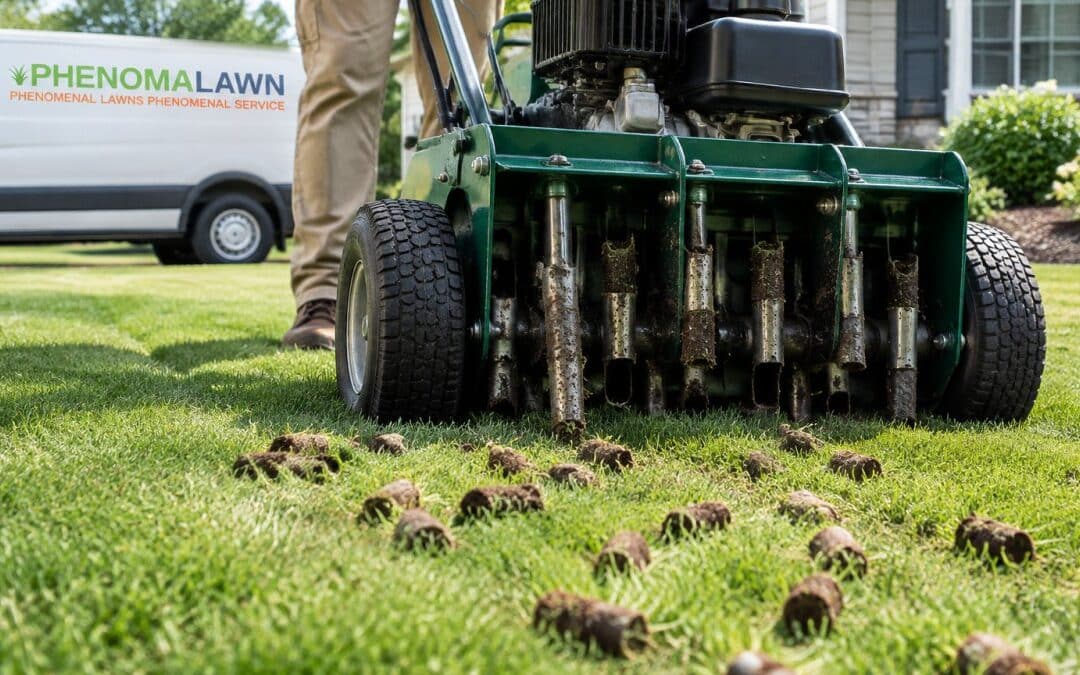
Core aeration is the process of pulling small plugs of soil out of your lawn so water, air, and nutrients can reach the roots. Many homeowners ask whether core aeration is worth the cost for their lawn.
Here is the part most guides get wrong. They tell you to aerate every fall like clockwork. But a lawn on good soil does not need it every year, and a lawn that is simply dry or hungry will not improve much from holes alone. Diagnosis comes first.
The Screwdriver Test and Other Quick Compaction Checks
Push a long screwdriver into the soil. If it slides in with light pressure, your soil is fine. If you have to lean on it, the soil is compacted.
Try these checks too:
- The water test: pour a bucket of water on a bare spot. If it pools and rolls off, water is not getting in.
- The plug test: push a shovel down and lift a chunk of turf. Roots that stop short in a thin layer mean trouble below.
- The footprint test: footprints that stay visible long after you walk across the lawn suggest tight soil.
- The weed test: plantain and knotweed thrive where grass struggles.
Watch out: these checks tell you about compaction, not about pests, disease, or a fertilizer problem. If your grass is thin but the screwdriver goes in easy, aeration is not your fix.
What Core Aeration Does to Compacted Soil and Grass Roots
A hollow-tine aerator removes finger-sized plugs of soil and leaves holes behind. Those holes do three jobs at once. They break up the tight layer, open a path for water, and let air reach the root zone where grass roots actually live.
Clay soil makes this worse. Indiana yards often hold heavy clay that packs down hard under foot traffic and mower wheels. Once that layer forms, roots stay shallow and the lawn dries out fast in summer.
Water, Air, and Nutrient Movement After Aeration
The holes are temporary, but the change in soil structure is not. Water soaks in instead of running off. Air movement reaches deeper. Fertilizer and water can get down to the roots instead of sitting on top.
Thatch breaks down faster too, because air and moisture reach the soil surface where microbes do the work. The result is a deeper root system and turf that holds up better when summer stress hits.
The Pros and Cons of Core Aeration Before You Pay
Core aeration is not free, and it is not magic. Here is the straight trade-off.
Pros:
- Relieves compacted soil and improves water infiltration
- Helps fertilizer reach the root zone
- Reduces thatch buildup over time
- Thickens thin grass when paired with overseeding
- Lowers runoff on sloped yards
Cons:
- Leaves small soil plugs on the surface for a week or two
- Does little for a lawn that is compacted only in a few spots
- Needs moisture afterward to pay off
- Best done in the right season, so timing matters
- Not a fix for weeds, grubs, or disease
A common mistake is aerating a lawn that just needs water and fertilizer. You pay for holes and see no change.
How Often Should You Aerate Your Lawn?
There is no universal schedule. Frequency should follow three inputs: grass type, traffic, and soil. Most lawns fall into a once-every-one-to-three-year range, but the right interval for your yard depends on which of those inputs is pushing hardest.
Frequency by Grass Type
Cool-season grasses, tall fescue, Kentucky bluegrass, and perennial ryegrass, do most of their root growth in fall and spring.
Warm-season grasses, bermudagrass, zoysiagrass, centipedegrass, and St. Augustinegrass, should be aerated in late spring or early summer, once they have greened up and are growing vigorously. Aerating dormant warm-season turf in winter does little because the grass is not repairing itself.
A common pattern is that cool-season lawns on clay need a pass every year or two, while warm-season lawns on sandier soil can go two to three years between passes unless traffic is heavy.
Frequency by Traffic and Soil
Aerate more often if you have:
- Kids or dogs running the same paths daily
- Heavy clay soil that packs down under foot traffic and mower wheels
- A lawn that was graded or built on fill dirt
- Thin grass and bare patches that keep coming back
- A driveway, patio, or fence line where foot traffic funnels into narrow strips
Aerate less often if your soil is loose, your lawn is young, or the screwdriver test passes with ease. High-traffic areas may need a second pass while the rest of the yard waits, you do not have to treat the whole property on the same schedule.
The Cost Angle on Frequency
This is where frequency and cost meet.
A practical rule: aerate when the screwdriver test fails, not when the calendar says so. If the test passes two years in a row, skip the pass and save the money.
Watch out: aerating a lawn that is drought-stressed or dormant can do more harm than good, because the grass is not growing fast enough to recover from the holes. Wait for active growth.
How to Aerate Lawn: Step-by-Step for DIY Homeowners
- Water the lawn two days ahead. Soft soil lets the tines go deeper.
- Mark sprinkler heads and shallow lines. A cheap flag set saves you a repair bill.
- Pick a cool, mild day. Heat and drought make recovery harder.
- Run the aerator in two directions. Overlap your passes for even coverage.
- Leave the plugs alone. They break down on their own within a week or two.
- Overseed right after. The holes give seed good soil contact.
- Water lightly for the first week. Keep the surface damp, not soaked.
Aerate Lawn Tools: Hollow-Tine, Spike, and Liquid Compared
| Tool | How It Works | Best For | Main Drawback |
|---|---|---|---|
| Hollow-tine aerator | Pulls soil plugs out | Real compaction relief | Slower, heavier machine |
| Spike aerator | Pushes holes into soil | Light, quick touch-ups | Can tighten soil further |
| Liquid aeration | Sprayed soil conditioner | Large yards, low mess | No physical plug removal |
| Aerator rental | Gas or tow-behind unit | DIY on a large lawn | Hauling and setup time |
Spike shoes and liquid products have their place, but they do not remove soil. For compacted clay, a hollow-tine pass does the most good.
Aerating Lawn Before and After: What Results to Expect
The first thing you will notice is the mess. Small plugs sit on top of the grass for a week or two, then disappear as rain and mowing break them down.
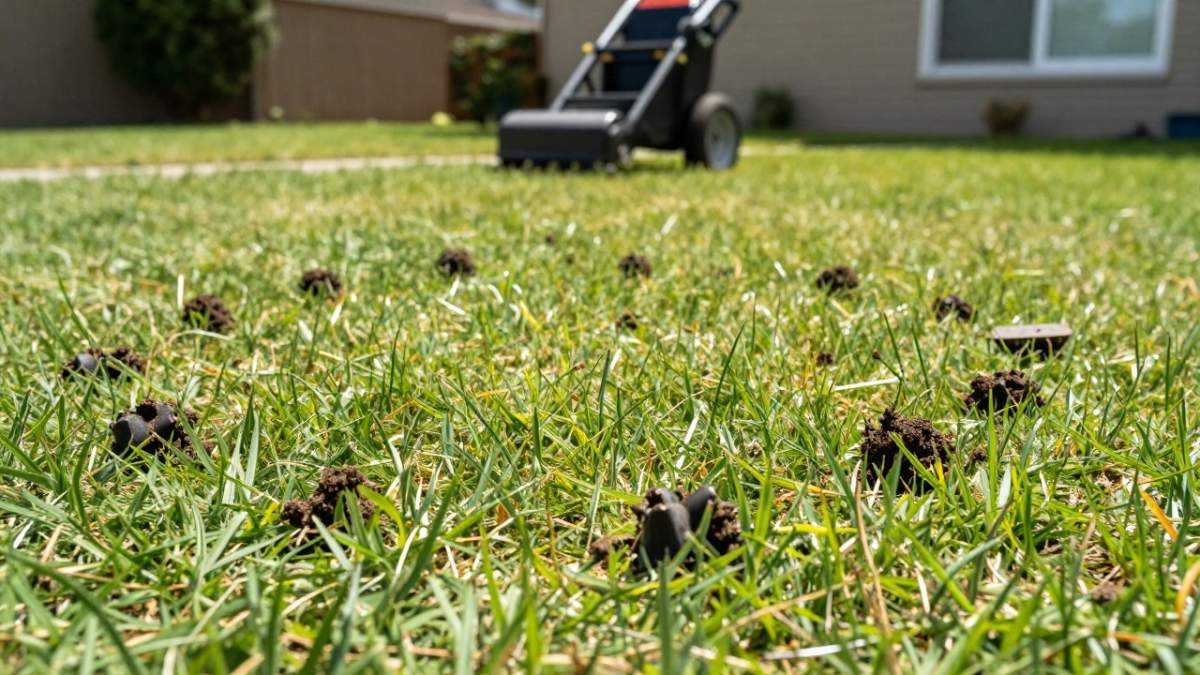
Real change takes longer. Expect water to soak in better within days. Grass color and thickness usually improve over the following weeks as roots push deeper, especially with seed and fertilizer down.
Set your expectations honestly. If you want thicker turf after aerating, pair it with a feeding program like our lawn fertilization and weed control service so the new root growth has something to work with.
Weighing the Cost Against the Benefit for Your Yard
This is the section most guides skip. The query asks whether core aeration is worth the cost, so here is a decision framework rather than a vague “it depends.”
The Two Ways to Pay
You have two cost structures to compare: renting an aerator and doing it yourself, or hiring a crew. Renting an aerator means paying a rental fee, fuel, and your time hauling the machine home and back. Professional aeration services typically bundle equipment and labor into a single price. Pricing depends on lawn size and services requested, so contact Phenomalawn for a current quote.
The real comparison is not just the sticker price. It is the rental fee plus your time and the risk of a missed pass, against a crew that shows up and handles the work.
A Simple Break-Even Framework
Ask four questions in order:
- How big is the lawn? Larger yards take longer and cost more in rental time, which narrows the gap between DIY and professional. Small yards often favor DIY on price alone.
- How bad is the compaction? If the screwdriver test fails across most of the yard, the benefit is real and the spend is justified. If it fails only in a few strips, spot-treat those areas instead of the whole property.
- Do you need overseeding too? Doing both in one visit saves a step and usually costs less than two separate appointments. If your lawn is thin, this is where aeration earns its keep.
- What is your time worth? A full day of yard work is not free. If you would have to take time off or rent a trailer, the professional option often wins on total cost.
When Aeration Is Worth the Money
Aeration can be a worthwhile expense when three conditions line up: the soil is genuinely compacted, the lawn is actively growing, and you plan to overseed or fertilize afterward so the new root growth has something to work with. In that scenario, the improvement in water infiltration and root depth usually shows up within weeks and pays back over the season.
When It Is Not
Skip the spend if the screwdriver slides in easily, if the grass is thin because of shade, pests, or a fertilizer problem rather than compaction, or if the lawn is dormant or drought-stressed. In those cases, put the money toward water, seed, and a feeding program instead. Aeration will not fix a lawn that is starved of nutrients.
When you are ready to compare, you can request a quote and see how the numbers stack up against doing it yourself.
Request a Quote and Let a Local Crew Handle Aeration
The screwdriver test can give you a quick read on compaction in under a minute. If the soil is tight, the lawn is thin, and traffic is heavy, aeration earns its keep.
We use an all-liquid program where everything is included for the price given, and if the lawn needs it, it gets it. If you would like a quote for your lawn, you can request a quote to get started.
A thicker lawn starts with a decision about your soil, not a shopping cart full of products.
Frequently Asked Questions
Is core aeration worth it for a typical suburban lawn?
It depends on whether your soil is actually compacted. If a screwdriver pushes easily into damp soil and water soaks in within minutes, core aeration adds little. If the soil is hard, water pools, and foot traffic has worn thin patches, core aeration is worth the cost because it opens the root zone for water, air, and nutrients. Diagnose first, then decide.
How many times a year should you core aerate your lawn?
Most cool-season lawns in the Midwest do well with one annual core aeration in early fall. Lawns with heavy clay soil or constant foot traffic may benefit from a second pass, and warm-season grasses are usually aerated in late spring or early summer when they are actively growing. Skip aeration during summer stress or dormancy.
What are the disadvantages of lawn aeration?
Core aeration leaves small soil plugs on the surface for a week or two, which some homeowners dislike. Aerating at the wrong time, such as during summer heat or drought, can stress grass. Spike aeration can worsen compaction by pushing soil sideways. Renting an aerator also takes time and effort, and doing it poorly leaves uneven coverage.
Should I overseed right after core aeration?
Yes, core aeration and overseeding pair well because the holes give seed direct contact with soil. Aerate first, then spread seed and keep the area watered lightly for a couple of weeks. Fall is the best window for cool-season grasses because soil is warm and air is cool, which favors germination before winter.
